11 Signs It’s Time to Redesign Your Website (+ What It Costs)
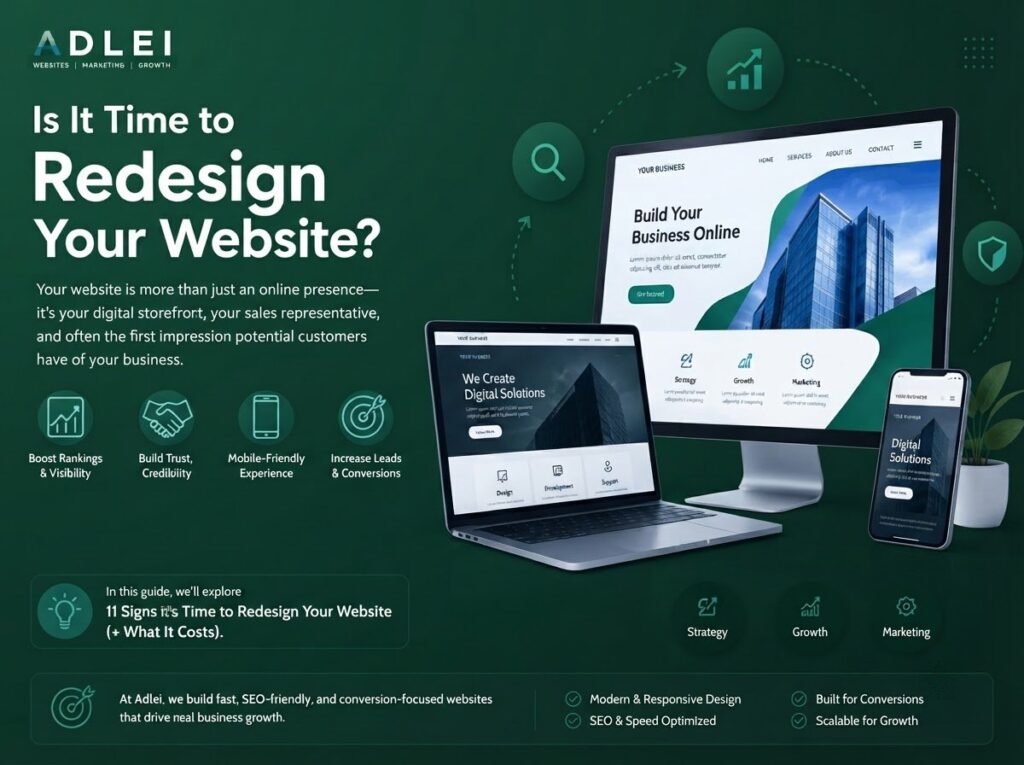
Your website is more than just an online presence—it’s your digital storefront, your sales representative, and often the first impression potential customers have of your business. At Adlei, we believe a high-performing website is one of the most powerful tools for business growth. In today’s competitive digital world, an outdated website can hurt your search engine rankings, reduce customer trust, and cost you valuable leads.
Technology, user expectations, and Google’s ranking algorithms continue to evolve. A website that performed well three years ago may no longer meet modern standards for speed, mobile responsiveness, security, or user experience. That’s why investing in a website redesign is essential for businesses that want to stay competitive.
In here, we’ll explore 11 Signs It’s Time to Redesign Your Website (+ What It Costs), explain the benefits of a modern website, discuss the factors that affect website redesign costs, and help you decide whether it’s time to invest in a redesign. Whether you’re a startup or an established business, Adlei is committed to helping you build a fast, SEO-friendly, and conversion-focused website that drives real business growth.
What Is a Website Redesign?
A website redesign is the process of updating and improving an existing website to meet modern design standards, business goals, and user expectations. It goes beyond changing the look of your website—it also enhances its functionality, performance, security, and overall user experience.
As technology and customer behavior continue to evolve, businesses need websites that are fast, mobile-friendly, and easy to navigate. A business website redesign helps ensure your site remains competitive while supporting your marketing and sales objectives.
A professional website redesign typically includes:
- A modern and visually appealing layout
- Responsive website design for all devices
- Improved website speed and performance
- Better navigation and user experience (UI/UX)
- SEO-friendly website structure
- Updated content and branding
- Enhanced website security
- Optimized calls-to-action for better conversions
Why Investing in a Website Redesign Matters
Your website is more than just an online presence—it’s a powerful business tool. It represents your brand, attracts potential customers, and influences purchasing decisions. As customer expectations and digital technologies evolve, keeping your website updated is essential to remain competitive.
A strategic website redesign can help your business:
- Build a stronger and more professional brand image
- Improve your website’s visibility in search engines
- Deliver a faster and smoother browsing experience
- Increase enquiries, leads, and online sales
- Create a seamless experience across all devices
- Strengthen customer trust and credibility
- Support your long-term business growth
Rather than simply refreshing the appearance of your website, a redesign focuses on improving performance, usability, and results. Investing in professional website redesign services ensures your website continues to meet modern standards while helping your business achieve its marketing and growth objectives.
11 Signs It’s Time to Redesign Your Website (+ What It Costs)
1. Your Website Feels Outdated
First impressions matter, and your website is often the first interaction customers have with your business. If your site looks old-fashioned or no longer reflects your brand, visitors may question your credibility. A modern website design with clean layouts, high-quality visuals, and updated branding creates trust and encourages users to explore further.
2. Your Website Takes Too Long to Load
Today’s users expect websites to load within seconds. If your pages are slow, visitors are likely to leave before viewing your products or services. Poor loading speed also affects your search engine rankings. A website redesign focused on website speed optimization can improve performance through optimized images, cleaner code, better hosting, and modern development techniques.
3. Your Website Isn’t Optimized for Mobile Devices
More than half of all web traffic now comes from smartphones and tablets. If your website isn’t easy to use on smaller screens, you’re losing potential customers. A responsive website design ensures your content looks great and functions smoothly on every device, providing a consistent user experience.
4. Your Search Engine Rankings Are Declining
If your website traffic from Google has dropped, outdated design and technical issues may be part of the problem. Search engines prioritize websites that are fast, secure, mobile-friendly, and well-structured. Redesigning your website with an SEO-friendly website structure can improve visibility and help attract more organic traffic.
5. Visitors Struggle to Navigate Your Website
A confusing layout, difficult navigation, or unclear calls-to-action can frustrate visitors and cause them to leave. Good website UI/UX makes it easy for users to find information, explore your services, and complete desired actions. A redesign improves usability and creates a smoother customer journey.
6. Your Bounce Rate Is Increasing
A high bounce rate often indicates that visitors aren’t finding what they need or aren’t impressed by your website. Slow pages, outdated visuals, poor navigation, and irrelevant content can all contribute to users leaving quickly. A business website redesign helps create engaging pages that encourage visitors to stay longer and interact with your brand.
7. Your Website Has Security or Technical Issues
Security is essential for protecting your business and customer information. If your website runs on outdated software, unsupported plugins, or lacks HTTPS encryption, it may be vulnerable to cyber threats. Modern website development includes enhanced security features, regular updates, and reliable protection against online risks.
8. Your Content No Longer Reflects Your Business
Businesses grow, services change, and customer expectations evolve. If your website still displays outdated information, old blogs, or expired offers, it can damage your credibility. A website redesign gives you the opportunity to refresh your content, improve SEO, and better communicate your current products and services.
9. Your Website Isn’t Generating Enough Leads or Sales
Your website should be a powerful marketing tool, not just an online brochure. If visitors aren’t filling out contact forms, requesting quotes, or making purchases, your site may need better conversion optimization. A redesigned website can improve call-to-action placement, landing pages, and user flow to increase enquiries and sales.
10. Your Brand Has Evolved
If you’ve updated your logo, colors, messaging, or overall brand identity, your website should reflect those changes. A consistent brand experience across all digital platforms helps build recognition, strengthens trust, and creates a more professional image for your business.
11. Your Competitors Have Moved Ahead
Take a look at your competitors’ websites. If they offer a faster, more attractive, and user-friendly experience, potential customers may choose them over you. Investing in professional website design helps your business stay competitive, improve customer engagement, and maintain a strong online presence.
How a Website Redesign Can Transform Your Business
A website redesign isn’t just about giving your site a fresh look—it’s about creating a better digital experience that supports your business goals. A modern, well-optimized website can improve customer satisfaction, strengthen your online presence, and drive measurable growth.
Deliver a Better User Experience
Visitors expect websites to be simple, fast, and easy to navigate. A modern design with intuitive menus, clear page layouts, and responsive functionality helps users quickly find the information they need, encouraging them to stay longer and engage with your business.
Boost Search Engine Visibility
Search engines favor websites that are fast, mobile-friendly, secure, and well-structured. A redesigned SEO-friendly website with improved technical SEO and optimized content can increase your visibility in search results and attract more qualified organic traffic.
Increase Leads and Sales
An effective website guides visitors toward taking action. Whether it’s filling out a contact form, requesting a quote, or making a purchase, strategic page layouts, compelling calls-to-action, and improved user journeys can significantly increase conversions.
Build Trust and Strengthen Your Brand
Your website reflects your business. A clean, professional, and visually consistent design creates a positive first impression, reinforces your brand identity, and gives customers confidence in your products or services.
Improve Website Performance
Modern website development focuses on speed, security, and reliability. By optimizing loading times, improving functionality, and enhancing website performance, your business can provide a smoother browsing experience while reducing bounce rates.
Stay Competitive in a Digital-First Market
Customer expectations continue to evolve, and competitors are constantly improving their online presence. Investing in a business website redesign ensures your website remains up to date with the latest technology, design trends, and user expectations, helping your business stand out in a competitive marketplace.
What Determines the Cost of a Website Redesign?
There is no fixed price for a website redesign because every business has different goals and requirements. The overall cost depends on the complexity of the project, the features you need, and the level of customization involved. Understanding these factors can help you plan your budget more effectively.
1. Number of Pages
The size of your website plays a major role in the redesign cost. A small business website with a few pages requires less time and effort than a large website with multiple service pages, blogs, product listings, or landing pages.
2. Design Complexity
A simple redesign using an existing template is generally more affordable than a fully customized professional website design. Custom layouts, unique graphics, animations, and interactive elements require additional design and development work.
3. Features and Functionality
The more advanced features your website needs, the higher the investment. Functions such as eCommerce stores, online booking systems, payment gateways, customer portals, live chat, and third-party integrations increase the scope of website development.
4. Content Creation and Migration
If your redesign includes rewriting website copy, creating new images, producing videos, or migrating existing content to a new platform, these services will influence the overall project cost.
5. SEO and Performance Optimization
A successful redesign isn’t just about appearance—it should also improve search visibility. Technical SEO, keyword optimization, faster loading speeds, structured data, and website optimization help improve rankings but require specialized expertise.
6. Ongoing Maintenance and Support
After launch, your website will need regular updates, backups, security monitoring, and performance checks. Investing in website maintenance helps keep your site secure, reliable, and running at its best for the long term.
7. Custom Development Requirements
Businesses with unique requirements may need custom website development to support specific workflows or integrations. While custom solutions involve a higher upfront cost, they provide greater flexibility, scalability, and long-term value.
8. Agency Experience and Expertise
The experience of the web design agency you choose can also affect pricing. A skilled team may charge more, but they often deliver a higher-quality responsive website design, better user experience, stronger SEO performance, and a website that generates better business results.
How to Plan a Successful Website Redesign
A successful redesign requires careful planning.
Follow these practical tips:
- Define your business goals.
- Understand your target audience.
- Audit your current website.
- Improve website structure.
- Focus on mobile responsiveness.
- Optimize page speed.
- Refresh website content.
- Strengthen website security.
- Follow SEO best practices.
- Test everything before launch.
Website Redesign Checklist
Use this quick checklist to determine whether your website needs an upgrade.
- Looks outdated
- Loads slowly
- Not mobile-friendly
- Poor Google rankings
- High bounce rate
- Poor user experience
- Low conversion rate
- Security concerns
- Outdated content
- Branding has changed
- Competitors have better websites
Why Choose Adlei for Your Website Redesign?
A successful website redesign requires the right combination of creativity, technology, and strategy. At Adlei, we build websites that not only look modern but also help businesses attract more visitors, generate quality leads, and achieve long-term growth.
Here’s why businesses choose Adlei:
- Custom Website Design – Every website is designed to match your brand, business goals, and target audience.
- SEO-Friendly Development – We build websites with SEO best practices to improve your search engine visibility.
- Responsive Design – Your website will work seamlessly across desktops, tablets, and mobile devices.
- Fast Website Performance – We focus on speed optimization to provide a smooth user experience.
- User-Centered UI/UX – Our designs are easy to navigate and created to improve engagement and conversions.
- Secure & Reliable – We implement modern security practices to keep your website protected.
- Scalable Solutions – Whether you need a business website, portfolio, or eCommerce store, we build websites that can grow with your business.
- Ongoing Support – From website maintenance to future updates, our team is here to support your digital journey.
At Adlei, we believe your website should be more than just an online presence—it should be a powerful marketing tool that helps your business stand out, build credibility, and drive measurable results. Whether you’re planning a website redesign, launching a new website, or looking for custom website development, we’re ready to help you create a website that performs as well as it looks.
Website Design Trends to Watch in 2026
The world of web design is constantly evolving as businesses focus on creating faster, smarter, and more engaging digital experiences. Staying updated with the latest trends helps your website remain competitive, improve user satisfaction, and meet modern search engine standards. Here are some of the top website design trends in 2026.
AI-Driven User Experiences
Artificial intelligence is transforming how websites interact with visitors. From personalized content recommendations and AI chatbots to smart search features, AI helps businesses deliver more relevant and engaging experiences.
Clean and Purpose-Driven Design
Modern websites are embracing simple layouts with plenty of white space, bold typography, and clear navigation. A clutter-free design allows visitors to focus on important content and improves the overall website user experience.
Mobile-First Development
With mobile devices generating the majority of web traffic, designing for smaller screens first has become a standard practice. A responsive website design ensures a seamless experience across smartphones, tablets, and desktops.
Faster and Smarter Performance
Users expect websites to load almost instantly. Businesses are investing in website speed optimization, lightweight code, image compression, and advanced hosting solutions to improve both user experience and SEO performance.
Interactive User Interfaces
Interactive elements such as hover effects, smooth scrolling, animated buttons, and engaging transitions create a more dynamic browsing experience without affecting website performance.
Accessibility for Everyone
Inclusive web design is becoming a priority. Websites are now built with features like keyboard navigation, readable fonts, proper color contrast, and screen reader compatibility to ensure accessibility for all users.
Enhanced Website Security
As cyber threats continue to grow, modern website development emphasizes stronger security measures, including HTTPS encryption, secure authentication, regular updates, and privacy-focused features to protect user data.
SEO and Core Web Vitals Optimization
Google continues to prioritize websites that deliver excellent performance and usability. Businesses are focusing on building SEO-friendly websites that meet Core Web Vitals standards, improve page experience, and achieve higher search rankings.
Custom Illustrations and Rich Visuals
Instead of relying solely on stock images, businesses are using custom graphics, branded illustrations, high-quality videos, and interactive visuals to create a unique and memorable online presence.
Sustainable and Future-Ready Websites
Businesses are increasingly choosing scalable, efficient, and environmentally conscious web solutions. Optimized code, faster servers, and streamlined designs not only improve website performance but also reduce digital resource consumption, making websites more sustainable for the future.
Conclusion
Your website is one of your most valuable business assets. If it’s outdated, slow, difficult to navigate, or failing to generate leads, it may be costing you valuable opportunities.
Recognizing these 11 Signs It’s Time to Redesign Your Website (+ What It Costs) can help you make informed decisions before your website starts affecting customer trust and search rankings.
At Adlei, we specialize in website redesign services, custom website development, and professional website design that deliver measurable results. Whether you need a complete business website redesign, improved website performance, enhanced website user experience, or a fully SEO-friendly website, our team can help you create a modern digital presence that drives growth.
If your website is no longer helping your business succeed, now is the perfect time to invest in a redesign that supports your goals for 2026 and beyond.
Frequently Asked Questions
Most businesses should consider a website redesign every 3–5 years, depending on technology, branding, and business growth.
A typical redesign takes 4 to 12 weeks, depending on the project’s complexity and the number of pages.
Yes. A properly planned redesign can improve website speed, structure, mobile responsiveness, and technical SEO, leading to better search rankings.
Absolutely. A modern website improves user experience, increases credibility, generates more leads, and supports long-term business growth.
Website maintenance involves regular updates, bug fixes, backups, and security patches. A redesign focuses on transforming the website’s design, functionality, and overall performance.